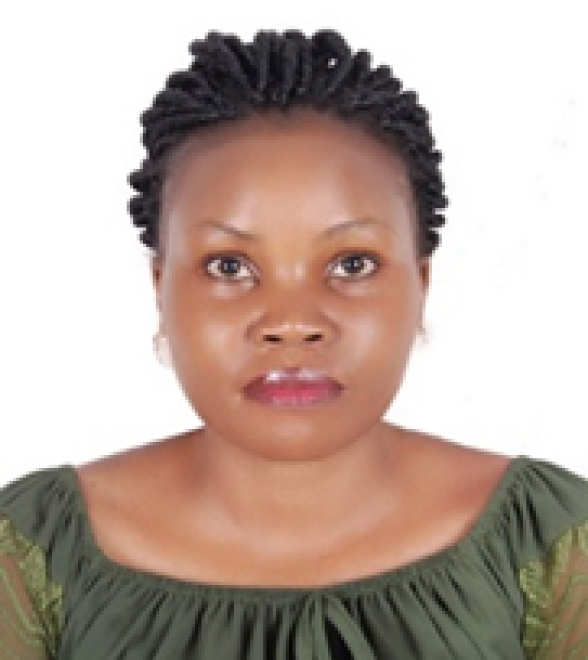
Racheal is currently the Director of the Alliance for African Partnership, Africa Office. She is a Lecturer in Development Studies at the Institute of Gender and Development Studies, Makerere University, one of Africa’s leading institutions of higher learning. With a strong commitment to advancing education and research, Racheal’s research interests lie at the intersection of gender, disability, education, employment, and climate change. Racheal earned her Doctorate in Development Studies from Makerere University, where she focused on skills development for youth employability. Before she started writing for publication, she got a bachelor’s degree in social sciences at Makerere University. After that, just to shake things up, she went to the Netherlands at the International Institute of Social Studies (now Erasmus) and graduated with a Master's in Development Studies. Her academic journey has been marked by numerous publications and presentations at international conferences. Racheal also worked as a consultant at UNESCO, Refugee Law Project, Plan International, AVSI, and World University Service of Canada. She is inspired by societies that take climate action, provide quality, inclusive education, ensure decent work, promote peace, uphold justice, and build strong institutions. Her goal is to contribute to the development of inclusive policies and programs that promote sustainable employability for individuals with disabilities while addressing the environmental challenges posed by climate change. Racheal is social with a great sense of humor, embraces diversity, has a likable character, commendable integrity, and management skills. She loves doing charity work and/or community service (beyond academia, she is the immediate past president of the Lions Club of Makerere for 2024/2025), reading scientific, inspirational, and cookbooks, touring wildlife, and visiting the ocean.
Semester I:
Development Studies
DES 3126: Human development
MDS 7104: Society, culture, and development
Bachelor of Arts
DES 1215: Indigenous Knowledge
DES 2236: Civil Society and Development
Organisational Studies
OGS 3107: Employment Relations
Semester II:
Development Studies
DES 1215: Indigenous development
DES 3223: Globalization and development
MDS 7202: Poverty, wealth creation, and development
Organisational Studies
OGS 2207: Management of formal and informal organizations
OGS 2209: Gender issues in organizations
Carnegie Post-Doc fellow on consolidating early career academic program through post-doctoral training at Makerere University (CECAP11); 2024 – 2027) titled: Bridging the gaps: enhancing disability services for a gendered inclusive academic success.
Developing a gendered consensus model of putting children with disabilities at the centre of quality inclusive education in refugee settlements and host communities, Uganda. I am engaged as a PI for the Makerere University Research and Innovation Fund Project (RIF 5) of 2024-2025.
Parish Development Model: Building on Lessons Learned or Starting Afresh? I was engaged as a Co-PI (RIF 4) of 2023.
Developing a Consensus Model of Putting Local Communities at the Centre of Preserving Water Resources and Environment in Mpanga Catchment, South Western Uganda. I was engaged as a PI (RIF 2) of 2021.
Developing an Integrated Framework for Addressing Population, Health and Environment for Uganda’s Refugee and Host Communities. I was engaged as a member (RIF 1) of 2019.
NETWORKS/COLLABORATIONS:
- Alliance for African Partnership
- Australia Africa Universities Network
ASSOCIATIONS YOU BELONG TO:
Netherlands Alumni Association, Uganda
International Institute of Social Studies, Alumni
Lions Clubs International
Mugabi, R. D., & Nakijoba, R. (2024). A Shelter of Love: Assistive Technologies for Education amongst Students with Learning Disabilities in Uganda. In Interactive Media with Next-Gen Technologies and Their Usability Evaluation (pp. 230-261). Chapman and Hall/CRC. Taylor and Francis.
Mugabi, R. D. (2024). Ideal Approaches of Mobilising Local Communities to Participate in Climate Change Adaptation in Mpanga Catchment, Western Uganda. In Mobility, Identity and Conflict Resolution in Africa: Resources Belong to the People (pp. 231-250). Cham: Springer Nature Switzerland.
Mugabi, R. D., Nakijoba, R., Nakirijja, D. S., & Sengendo, M. (2021). Formal and Non-formal Skills Improvement for the Marginalised Youth in Uganda. Advanced Journal of Social Science, 9(1), 10-26.
Nakijoba, R., & Mugabi, R. D. (2025). Family planning and Contraceptives use: Perspectives and experiences of Women with Disabilities in Iganga and Kaliro Districts, Uganda. Advancing Population and Development in Uganda and Beyond: Present and Future Considerations in honour of Dr. Jotham Musinguzi, 157.
Nakijoba, R., Mugabi, R. D., Awobamise, A., & Majanja, Z. E. I. (2023). Social Effects of Covid-19 Pandemic in Uganda. In Covid-19 in Africa: Societal and Economic Implications (pp. 197-214). Cham: Springer Nature Switzerland.
Nakijoba, R., Mugabi, R. D., Ayodeji, A. O., & Zaaly’embikke, I. M. (2022). We are as valuable as non-disabled students. COVID-19 and Education in Africa: Challenges, Possibilities, and Opportunities: Routledge.
Nakijoba, R., Ddungu, R. M., & Awobamise, A. O. (2022). COVID-19 School Closures in Uganda and their Impact on the Well-being of Teachers in Private Institutions in Semi-urban Districts. Advanced Journal of Social Science, 10(1), 52-62.
Ddungu, R.M., Nakijoba, R., Awobamise, A., & Merab, A. (2021). Assessment of Social Media’s Influence on the Academic Performance of Tertiary Institution Student. Annals of Spiru Haret University. Economic Series, 21(3).
Mugabi R.D. (2021). The question of skills development for employability of early school leavers in central Uganda." Journal of Liberal Arts and Humanities 2, (9): 11-23.